
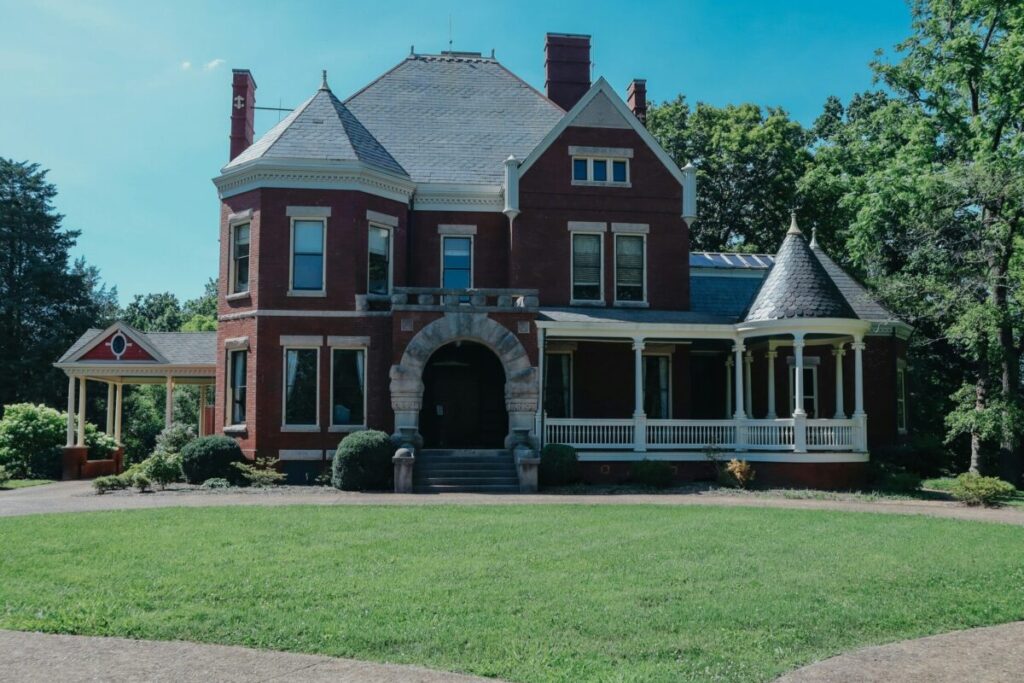
Buying a Historic Home in Macon GA: What You Should Know Before You Fall in Love With the Architecture
Sometimes you know before you ever reach the front door.
The porch.
The columns.
The old brick.
The original windows.
A sweeping staircase visible through the entry hall.
Heart pine floors that have been walked across for generations.
There is something about a historic home in Macon, Georgia that a newly constructed house simply cannot reproduce.
And Macon has an extraordinary collection of them.
From grand residences and early twentieth-century homes to Craftsman bungalows, Tudor Revival houses, Colonial Revival architecture, cottages, and distinctive homes designed specifically for the streets on which they still stand, Macon’s historic neighborhoods tell the story of the city one house at a time.
But buying one of these properties can offer something else that prospective buyers may not initially realize.
In Macon, preservation is not something homeowners necessarily have to navigate alone.
The city has spent decades protecting its architectural heritage, and organizations such as Historic Macon Foundation have created an unusually strong preservation network around the people who choose to invest in these properties.
Georgia also provides financial incentives that may help qualifying homeowners rehabilitate historic residences.
And an important expansion of Georgia’s Historic Home Tax Credit took effect in 2026, potentially opening the program to additional owner-occupied historic homes.
That means falling in love with a historic Macon home may be the beginning of something much more interesting than simply purchasing an older house.
It can be an opportunity to preserve a remarkable piece of Macon while making it your own.
Buying a historic home in Macon is not simply about owning something old. It can be an opportunity to become the next steward of remarkable architecture in a city with preservation organizations, local expertise, design protections, and financial incentives specifically intended to help historic properties remain part of Macon’s future.
Macon Is a City Where Historic Architecture Is Part of Everyday Life
Historic homes are not unusual exceptions in Macon.
They are part of the city’s identity.
Historic Macon Foundation identifies 15 National Register historic districts containing more than 6,000 historic buildings across Macon.
Those districts include:
- Vineville
- Ingleside
- Cherokee Heights
- Shirley Hills
- North Highlands
- Pleasant Hill
- East Macon
- Fort Hill
- Napier Heights
- The Macon Historic District
- Wesleyan College Historic District
- and other historically significant areas throughout the community
Within them are homes representing numerous periods of Macon’s growth and an impressive range of American architectural traditions.
That diversity is part of what makes shopping for a historic home here so interesting.
One street may be lined with large early twentieth-century residences beneath mature trees.
Another may contain Craftsman bungalows with deep front porches.
Elsewhere, buyers may encounter Tudor Revival details, Colonial Revival homes, Neoclassical influences, Victorian-era architecture, cottages, and houses that simply do not fit neatly into anything being constructed today.
You are not necessarily searching through variations of the same floor plan.
You may be searching for a house with an identity.
The Opportunity Is Bigger Than the Architecture
The architecture may be what first captures your attention.
But one of the strongest arguments for buying a historic home in Macon is the preservation infrastructure that exists around it.
Historic Macon Foundation has been preserving and revitalizing Macon properties for decades.
The organization describes its mission as revitalizing communities by preserving architecture and sharing history.
Its work has included rehabilitating nearly 150 houses, neighborhood revitalization, preservation advocacy, National Register work, educational programs, tax-credit consulting, and low-interest loan programs.
Historic Macon has also become an important resource for owners undertaking substantial rehabilitation projects.
Its preservation consulting program reports completing more than 140 historic rehabilitation tax-incentive projects representing more than $123 million in private investment.
That experience matters.
For a buyer looking at an older Macon property and wondering, Could we restore this? Could we update it without destroying what makes it special? Are there financial incentives available? Where would we even begin?
There are people in Macon who work with those questions every day.
A historic house does not have to remain frozen in time. Successful preservation is often about retaining the architecture and craftsmanship that make the property special while thoughtfully adapting the home for the way people live today.
Historic Macon Foundation Can Be an Important Resource
Anyone seriously considering a historic property in Macon should know about Historic Macon Foundation.
The organization works far beyond simply advocating for old buildings.
Historic Macon’s preservation services include assistance involving:
- Historic rehabilitation tax-credit consulting
- National Register of Historic Places nominations
- Preservation planning
- Neighborhood revitalization
- Educational programs
- Historic-property research
- Preservation advocacy
- Low-interest loan programs and preservation resources
Programs, funding, loan availability, and eligibility requirements can change, so homeowners should contact Historic Macon directly regarding a specific property or rehabilitation project.
But simply having this level of preservation expertise available locally is significant.
A homeowner considering a rehabilitation does not have to begin by trying to understand decades of preservation rules alone.
Historic Macon can help property owners understand the process and determine what programs may apply to a particular project.
Visit Historic Macon Foundation
Visit Historic Macon Foundation in Downtown Macon
Historic Macon’s office is located at:
950 Third Street
Macon, GA 31201
For someone considering a major historic rehabilitation, talking with preservation professionals early in the process can be extremely valuable.
That is especially true if the owner hopes to qualify for historic preservation incentives.
A Major Georgia Historic Home Tax Credit Change Took Effect in 2026
This is one of the most important recent developments for buyers considering historic homes in Georgia.
Beginning in 2026, eligibility for Georgia’s Historic Home Tax Credit expanded for qualifying owner-occupied primary residences.
Previously, historic homeowners generally needed their property to be individually eligible for the National Register of Historic Places or be a qualifying property within a National Register district.
Under the expanded program, an owner-occupied primary residence may also potentially qualify when the home is locally designated as historic or is a contributing property within an eligible local historic district, subject to Georgia Department of Community Affairs certification and program requirements.
For a city such as Macon—with extensive local historic zoning and thousands of historic properties—that is an important development.
It potentially brings another preservation tool within reach of homeowners who want to reinvest in historic residences.
How Much Is the Georgia Historic Home Tax Credit?
For a qualifying principal residence, Georgia’s State Income Tax Credit Program for Rehabilitated Historic Property currently provides a tax credit equal to 25 percent of qualifying rehabilitation expenses, subject to a maximum credit of $100,000 for a principal residence.
That can make a meaningful difference when undertaking a substantial rehabilitation.
But this is not a rebate automatically available simply because a house is old.
There are eligibility requirements.
The property and project must qualify.
The rehabilitation must satisfy the applicable substantial rehabilitation test.
Work must meet Georgia Department of Community Affairs rehabilitation standards.
And the application and certification process matters.
That is another reason contacting Historic Macon or the Georgia Historic Preservation Division before substantial rehabilitation work begins can be important.
Do not purchase a property assuming a specific tax credit will automatically be available.
Instead, view these programs as an opportunity worth investigating with qualified professionals.
One of the most exciting things about historic-home ownership in Macon is that preservation and financial practicality do not always have to work against one another. Georgia’s preservation incentives are specifically designed to encourage qualifying owners to reinvest in historic buildings.
There May Also Be a Property Tax Benefit
Georgia maintains another preservation incentive known as the Preferential Property Tax Assessment Program for Rehabilitated Historic Property.
For qualifying rehabilitation projects, the program can freeze the county property-tax assessment at its pre-rehabilitation level for approximately 8½ years.
Both principal residences and certain income-producing historic properties can potentially participate.
Again, eligibility requirements apply.
The property must meet the appropriate historic designation requirements, the rehabilitation must meet applicable standards, and the project must satisfy the program’s substantial-rehabilitation requirements.
But for someone considering a significant investment in a historic property, it is another program worth understanding before work begins.
What About the Federal Historic Tax Credit?
Buyers sometimes hear about the federal historic rehabilitation tax credit and assume it applies to a house they plan to occupy.
Generally, it does not.
The federal historic rehabilitation program provides a 20 percent tax credit for qualifying rehabilitation of certified historic buildings used for income-producing purposes.
An ordinary owner-occupied private residence does not qualify for the federal credit.
That distinction is important.
Georgia’s Historic Home Tax Credit, however, is specifically relevant to qualifying owner-occupied historic residences.
For buyers considering mixed-use, rental, commercial, or income-producing historic property, the federal program may become relevant and professional tax and preservation guidance should be obtained.
Historic Design Review Can Help Protect What You Are Buying
Some buyers initially hear the words historic district and immediately wonder:
Does that mean I cannot change anything?
Not necessarily.
It is important to distinguish between different types of historic designation.
Being listed in the National Register of Historic Places by itself does not place private restrictions on what an owner can do to a property.
Local historic zoning, however, can establish design-review requirements.
In Macon, properties located in designated local design-review districts may require review and a Certificate of Appropriateness for certain exterior work visible from a public right-of-way.
Macon-Bibb’s local design-review districts include areas such as:
- Vineville
- Cherokee Heights
- Intown
- Historic Beall’s Hill
- The Central Business District
- Historic commercial areas
Depending on the property and project, review may apply to changes involving windows, exterior materials, porches, roofing, additions, fences, landscaping, new construction, demolition, or other visible alterations.
But there is another way to look at those requirements.
They help protect the neighborhood that attracted you in the first place.
When buyers pay a premium for mature streets, historic architecture, original porches, distinctive rooflines, old trees, and homes that relate architecturally to one another, preservation standards can help protect those characteristics from disappearing one property at a time.
You Can Preserve History Without Giving Up Modern Living
Owning a historic home does not necessarily mean living as people did when the house was constructed.
Historic properties throughout Macon have been successfully adapted to contemporary life.
Depending on the individual property, owners may be able to incorporate:
- Updated kitchens
- Modern bathrooms
- New heating and cooling systems
- Updated electrical systems
- Modern plumbing
- Improved insulation and energy efficiency
- Home technology
- Security systems
- Modern appliances
- Updated lighting
- Outdoor living spaces
The key is understanding the house before deciding how to change it.
A thoughtful renovation asks two questions at the same time:
What does this home need for the future?
and
What should never be lost?
That balance is where a good historic rehabilitation becomes something special.
Some Features May Be Almost Impossible to Recreate Today
Before replacing something in a historic house, understand what you have.
Older Macon homes can contain architectural materials and craftsmanship that would be extraordinarily expensive—or sometimes nearly impossible—to reproduce authentically today.
Depending on the property, that may include:
- Original heart pine flooring
- Detailed millwork
- Handcrafted staircases
- Original mantels
- Decorative plaster
- Historic windows
- Transoms
- Built-in cabinetry
- Original doors and hardware
- Terrazzo or historic tile
- Masonry fireplaces
- Large front porches
- Architectural columns
- Unusually tall ceilings
Sometimes restoration makes more sense than replacement.
Sometimes a feature needs to be adapted.
And sometimes replacement truly is necessary.
The important thing is making that decision deliberately rather than removing something valuable simply because it is old.
Have the Home Thoroughly Inspected
The positive side of historic-home ownership does not mean ignoring practical due diligence.
In fact, understanding the property thoroughly can make buying one much more comfortable.
A home inspection should evaluate the same major systems that matter in any house, with additional attention paid to the age, condition, and history of the building.
Depending on the property, buyers may want appropriate professionals to evaluate:
- Roofing
- Foundation and structural components
- Crawl spaces or basements
- Drainage and moisture
- Electrical systems
- Plumbing
- Heating and cooling systems
- Chimneys and fireplaces
- Windows and exterior woodwork
- Termite or wood-destroying organism history
- Previous additions and renovations
- Insulation and ventilation
The objective is not to create a list of reasons not to buy the house.
It is to understand the house.
A 100-year-old home does not need to be a new home.
It needs to be a well-understood home.
Look at the Work That Has Already Been Done
Some historic Macon homes have been carefully maintained for generations.
Others have undergone extensive renovations.
And occasionally, a beautiful property has experienced multiple renovations from very different periods.
Buyers should try to understand what changed and when.
Ask questions.
Was the electrical system updated?
When was the plumbing replaced or modified?
How old is the roof?
What type of HVAC system is installed?
Were additions permitted?
Have structural repairs been made?
Were windows restored or replaced?
Has the house previously participated in a preservation incentive program?
Are there records of renovations?
Historic homes often reveal their stories gradually.
The more you know about the property’s history, the better prepared you are to become its next owner.
Before You Renovate, Find Out What Programs May Be Available
This deserves special emphasis.
If you purchase a qualifying historic home and are considering substantial rehabilitation, do not wait until the project is nearly finished to begin asking about preservation incentives.
Georgia’s Historic Preservation Division requires documentation of the property’s condition and proposed rehabilitation as part of the application process.
Projects submitted after they are substantially complete can jeopardize eligibility.
Talk to the appropriate professionals early.
That may include:
- Historic Macon Foundation
- Georgia’s Historic Preservation Division
- Macon-Bibb Planning & Zoning
- An architect experienced with historic buildings
- A qualified contractor
- Your accountant or tax professional
- An attorney when legal questions are involved
A little planning at the beginning can make a very large difference later.
Planning Work for 2027? Verify the Applicable Building Codes
Construction requirements continue to evolve even when the building itself may be more than a century old.
Georgia has adopted additional state construction-code amendments scheduled to become effective January 1, 2027.
That does not mean every historic house must suddenly be reconstructed to modern standards.
It does mean that someone planning a significant renovation, addition, system replacement, or other permitted project extending into 2027 should verify which building, electrical, plumbing, mechanical, and other requirements apply when permits are obtained.
Historic design review and building-code compliance are also different processes.
One addresses preservation and compatibility.
The other addresses construction requirements and safety.
Experienced architects, contractors, preservation professionals, and local officials can help owners navigate both.
The Neighborhood Matters as Much as the House
Historic-home buyers frequently discover that they are buying more than architecture.
They are buying a setting.
Mature trees.
Sidewalks.
Front porches.
Established streets.
Longtime neighbors.
Parks.
Churches.
Historic institutions.
Neighborhood traditions.
And homes that have developed individuality over generations.
That is why Patti encourages buyers to spend time in an area before making a decision.
Drive the surrounding streets.
Come back at another time of day.
Look at neighboring properties.
Study the architecture.
Notice how houses sit on their lots.
Consider your daily drive.
Walk the neighborhood where appropriate.
Historic districts are not interchangeable.
Each has its own history and personality.
There Is Something Special About Becoming the Next Chapter
A newly constructed home begins with you.
A historic home comes with a story already underway.
Someone selected the land.
Someone designed the house.
Craftsmen built it.
Families lived there.
Children grew up there.
Holidays happened there.
Macon changed around it.
Trees grew.
Streets evolved.
Generations came and went.
And somehow the house remained.
Buying that property means becoming part of its next chapter.
That does not mean you cannot change it.
It means you have the opportunity to decide which parts of its story deserve to continue.
The best historic homes are not museums. They are living homes—places where good stewardship allows beautiful architecture from another generation to continue serving families today.
Historic Macon Makes That Opportunity Even More Compelling
Not every city with old houses has built a preservation culture around them.
Macon has.
The combination of thousands of historic properties, nationally recognized districts, local preservation regulations, Georgia rehabilitation incentives, and an organization such as Historic Macon Foundation gives buyers access to resources that can make historic ownership much easier to understand.
Historic Macon’s work demonstrates something important.
Preservation is not simply about preventing change.
It can be about reinvestment.
Revitalization.
Restoring neighborhoods.
Saving craftsmanship.
Returning neglected buildings to productive use.
And helping the next generation enjoy places that could otherwise disappear.
For someone who has always imagined restoring a historic home, that can make Macon an especially interesting place to begin.
This Is Where Patti Chapman Comes In
Patti Chapman grew up in Macon.
This is her home.
And when you are considering a historic property, local experience matters.
Two houses may have been built in the same decade and be located less than a mile apart, yet present entirely different considerations.
One may have been meticulously maintained.
Another may have undergone a major rehabilitation.
Another may be waiting for someone with the vision to restore it.
The zoning may differ.
Historic designation may differ.
Renovation history may differ.
The surrounding neighborhoods may feel completely different.
Patti can help buyers evaluate the real estate side of that decision while helping them connect with the appropriate professionals for specialized inspections, preservation questions, rehabilitation planning, zoning, design review, tax incentives, and construction advice.
She can also help buyers investigate the history of a property, understand comparable sales, evaluate location, review available seller disclosures and records, and navigate the purchase itself.
Because buying a historic home should begin with excitement.
Then it should be supported by good information.
Thinking About a Historic Home in Macon?
Whether you are looking for a beautifully restored residence, an architectural treasure that has been carefully maintained, or a historic property with the potential to become something extraordinary, Patti Chapman can help you explore the possibilities throughout Macon and Middle Georgia.
Before You Fall in Love With the Architecture, Look at the Opportunity
Yes, you may notice the architecture first.
That is understandable.
A beautiful historic Macon home can make quite an entrance.
But look beyond the staircase.
Beyond the porch.
Beyond the old windows, fireplaces, moldings, and high ceilings.
Look at the larger opportunity.
You may be purchasing a home with craftsmanship that cannot easily be reproduced.
You may be joining one of Macon’s established historic neighborhoods.
You may have access to professionals who understand preservation.
A qualifying rehabilitation may potentially benefit from Georgia tax incentives.
Local design protections may help preserve the character of the neighborhood around you.
And Historic Macon Foundation provides buyers and owners with something invaluable:
A preservation organization that understands these buildings and wants to see them succeed.
That makes buying a historic home in Macon different.
The objective is not simply to preserve the past.
It is to take the best of that past and carry it forward.
And perhaps, somewhere on a shaded Macon street, behind a front door that has already opened for generations of families, the next chapter is waiting for you.
Contact Patti Chapman with Sheridan Solomon & Associates at 478-714-2133 to begin exploring historic homes for sale in Macon, Georgia.
Information regarding historic designations, tax incentives, rehabilitation programs, zoning, design review, building codes, preservation standards, and other governmental or nonprofit programs is provided for general informational purposes and is subject to change. Eligibility for any tax credit, property-tax treatment, loan, grant, preservation program, or other incentive depends on the individual property, owner, proposed work, timing, expenditures, certification, and applicable program requirements. Buyers and property owners should independently verify current information with Historic Macon Foundation, the Georgia Department of Community Affairs Historic Preservation Division, Macon-Bibb County Planning & Zoning, appropriate building officials, and qualified tax, legal, architectural, engineering, inspection, and construction professionals before purchasing property or beginning rehabilitation work. Tax information is not tax or legal advice.